To make these images, I turned the center column of my tripod upside down. Safely getting my camera into the now-upside-down ARCA-style clamp took a measure of care and dexterity. I placed the rig over a light box, and added my Laowa wide-angle macro probe lens to the camera.
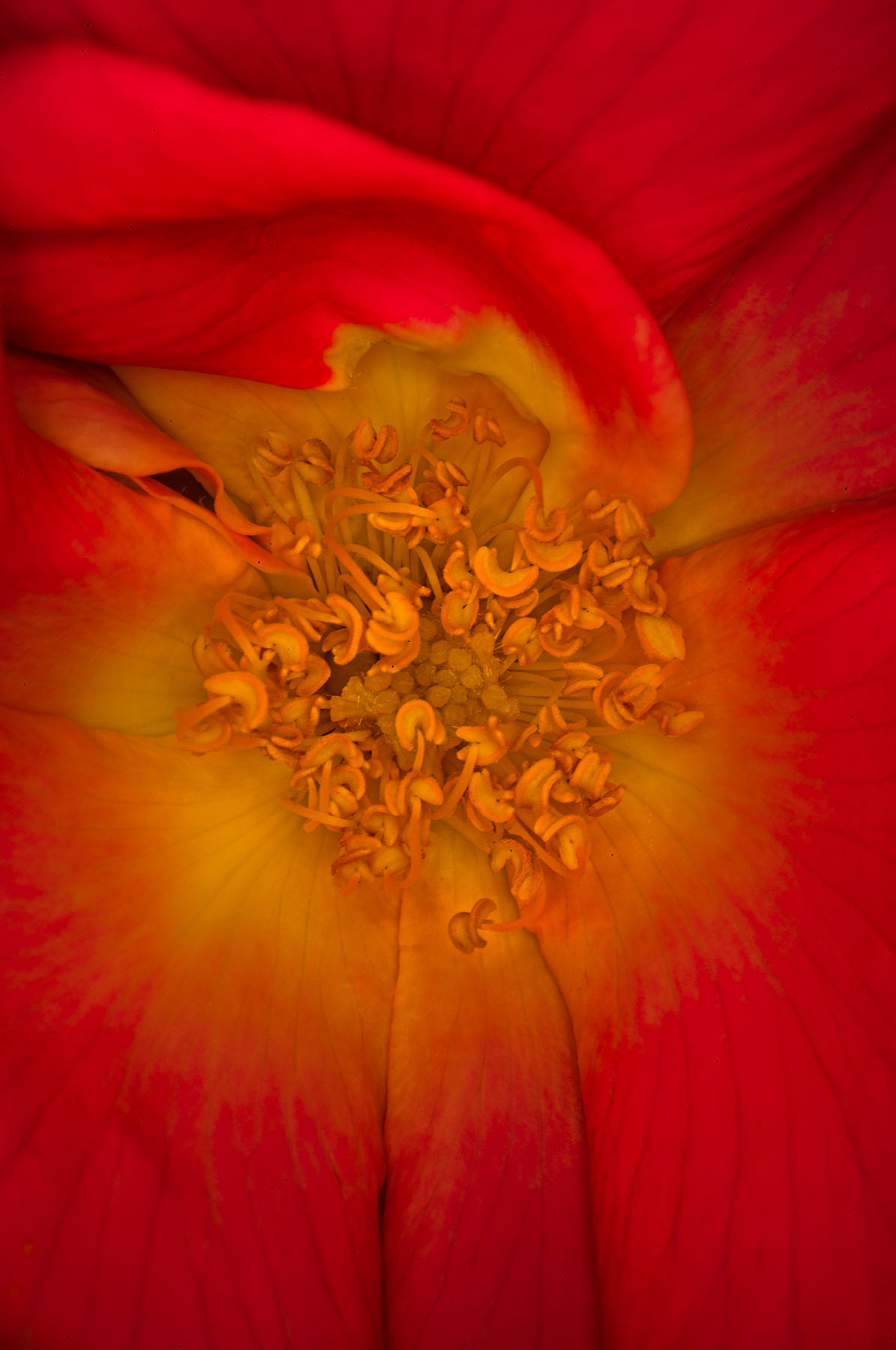
Each exposure was made with the front element of the lens extremely close to the flower. To expose, the lens was stopped all the way down (to f/40). But first, to critically focus, I needed to open the lens up. Wide open with this lens meant f/14, the widest aperture for this lens—and, no, f/14 is not a typo! With the built-in ring light turned on at f/14, I could see to focus.
Turning the ring light back off, and the aperture back to f/40, the actual exposures were fairly long (Rose, above, 60 seconds; Gaillardia, below, 30 seconds). With each, I used the backlighting from the light pad, but then used a very quick burst of supplemental front light from the ring light.

Note that in both cases the lens was inserted within the blossom, with petals curving upwards around the probe. The wide-angle nature of the lens mitigates this effect, so that you can’t really tell, and might even think the Gaillardia is essentially flat.
Pingback: Harold Davis—Best of 2025 – Harold Davis
Pingback: Dream Lens – Harold Davis